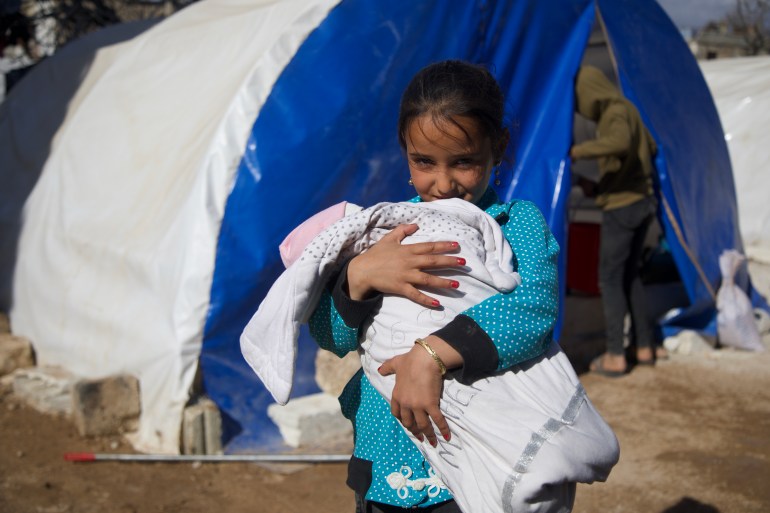
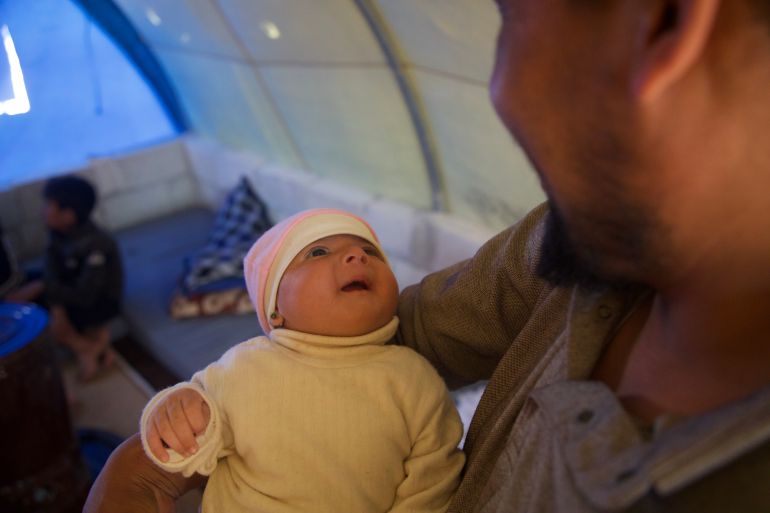
Jandaris, Syria – The story of the “miracle baby”, born in the rubble as her mother died, captivated the world when the quakes hit southern Turkey and northwestern Syria on February 6.
Her entire family died when their house collapsed on them, and their close relatives who lived next door took her in. This is the story of them rebuilding their lives as baby Afraa completes 40 days – traditionally a time of celebration for both baby and mother in Syria.
Recommended Stories
list of 4 items- list 1 of 4Wildfires reopen earthquake wounds in Turkiye’s shattered Hatay province
- list 2 of 4Romania’s geeks are mapping earthquake risk in EU’s highest-risk capital
- list 3 of 4Earthquake fever grips Turkey’s Istanbul amid fears of ‘the big one’
- list 4 of 4Paint and tears: Northwest Syria commemorates 2023 earthquakes
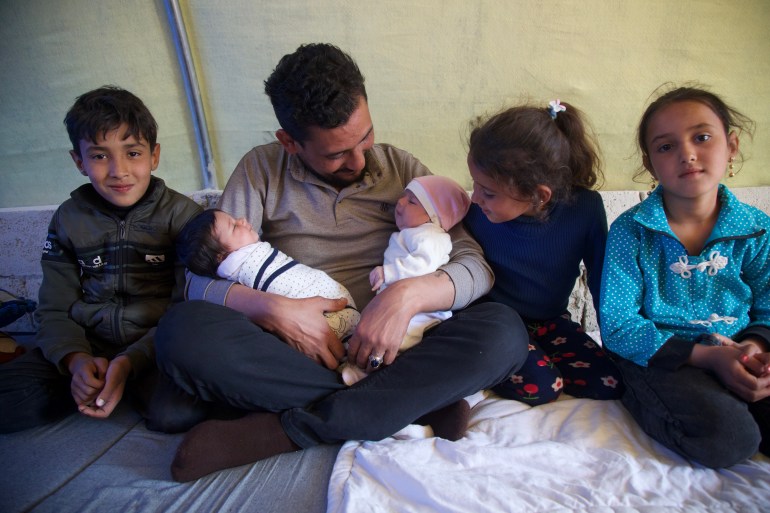
Instead, baby Afraa now lives with her “new family”: her paternal aunt, 31-year-old Hala, and her husband and children in a small camp set up by her extended family members whose homes were destroyed in the quakes.
She has six new cousin siblings, the eldest is 10-year-old Mal al-Sham and the youngest is one-month-old Ataa, who was born two days after Afraa.
The family welcomed Al Jazeera into their simple tent to talk about the day Afraa was born, finding her in the rubble, and their sorrow at losing their relatives.
‘I just knew his house had collapsed’
Khalil Shami Al-Suwadi, Hala’s 34-year-old husband, was awake when the earthquakes hit, two of his children had woken up and he was sitting up with them. The night had been disquieting and he was worried.
His brother-in-law, 26-year-old Abdullah, had come over for dinner with him and Hala and they had suggested that he stay with them longer and spend the night at their place. Their homes were right next door to each other and family members moved easily between the two.

Abdullah, also known as Abu Rudayna (Father of Rudayna, his eldest child), apologised to his sister, telling her and al-Suwadi that he had to go see some friends and would go home after that. Later, at about 2am, Abu Rudayna changed his online status to a Quran-inspired phrase: “Your death will come to you even in your home,” al-Suwadi tells Al Jazeera with wonder in his voice.
When the first earthquake hit, al-Suwadi says, his heart sank and he was sure the home next door had fallen on his cousin and his family. Running outside, his fears were confirmed and the digging began, first with their hands then with equipment loaned to them by a friend in Idlib. At one point, someone came to al-Suwadi and said part of a woman’s body had been uncovered, could he come to see if he could identify her?

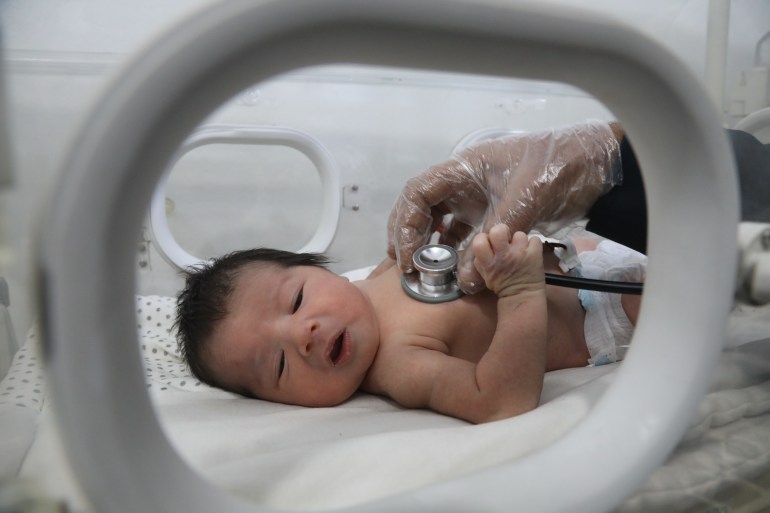
“By then, I knew the rest of the family was dead, so I grabbed the baby and ran to the military hospital in Jandaris so I could try to save her. My wife was very pregnant at the time – she went into labour two days later – and couldn’t come with me so Umm Abdou, our Kurdish neighbour, did.
“At the military hospital they told us the baby looked fine and just needed to be breastfed by a woman, but I didn’t feel good about what they were saying, it didn’t make sense. So we went on to Afrin and found a hospital there with a doctor who took care of her until we could bring her home. She stayed there for days under their care.”
“I breastfeed both girls … I would have never given up Afraa. She’s my niece, my own blood. Many people wanted to adopt her, but we would not have it. We will take care of her just like our own children,” said Hala.
Al-Suwadi echoed Hala’s sentiments: “I loved my cousin, everyone did, and will take care of his daughter like she was my own. Her father’s family wanted to take her in and adopt her but I refused. I spoke to her grandparents and they gave us their blessing to make her one of our daughters.”
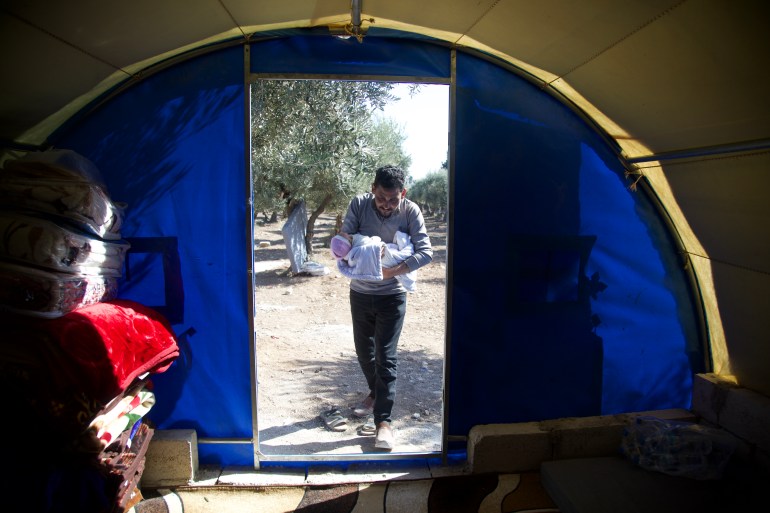
“I was so happy when my parents brought Afraa home. She’s my cousin, you know,” eight-year-old Doaa told Al Jazeera.
Doaa misses her other cousins, Afraa’s older siblings, and recounts their pet names with ease: Radoona, Attawa, Nawara and Hamoodi she recites, aware that they’re gone but accepting of the loss, which has been a constant companion for many in northwestern Syria for years of civil war and strife.
“If I had to choose a favourite baby now, I would choose Afraa because she is a memento of my Uncle Abdullah and his family.”